
The Power of Human Connection: An Unexpected Boost
In today's world, we are often immersed in a maelstrom of individualism, where competition and personal achievement seem to be the only metrics of success. However, there is an underestimated force, a silent but powerful catalyst that can radically transform our personal and professional path: community work. Far from being a mere romantic utopia, collaboration, mutual support, and constant interaction with other human beings offer a myriad of tangible benefits that directly impact our growth. From broadening our perspectives to strengthening our resilience, community stands as a fundamental pillar to reaching our full potential. It's time to dismantle the notion that success is a lonely path and embrace the richness that comes from building and belonging to a network of support and collaboration. In the following lines, we will explore ten invaluable advantages of immersing ourselves in community work, revealing how this dynamic can be the engine that drives our development in all areas of life.
1. Broadening Perspectives and Mental Horizons
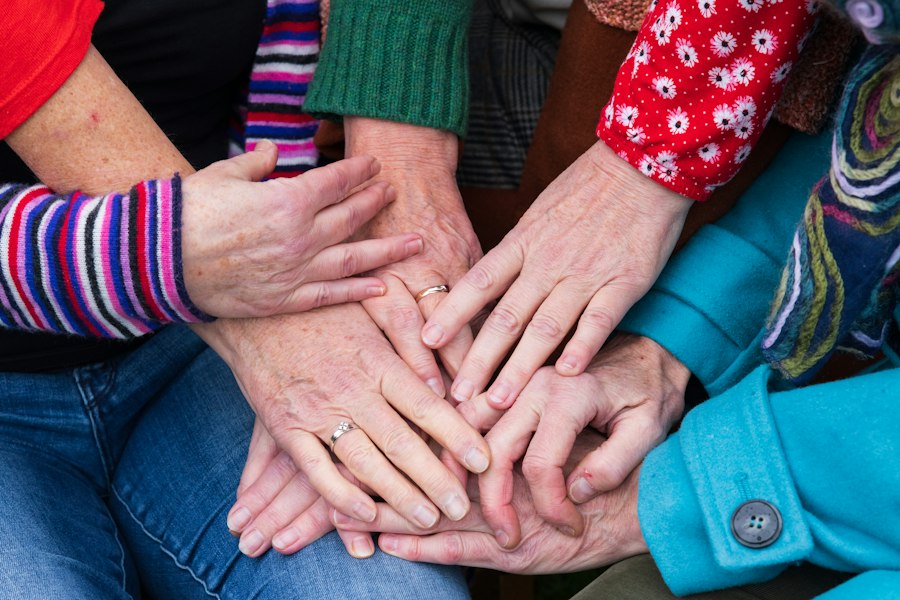
Working in community exposes us to a diversity of thoughts, experiences and approaches that we would rarely encounter alone. Each individual brings their own lens to reality, shaped by their education, culture, professional career and personal experiences. By engaging with this wealth of perspectives, our own ideas are challenged, enriched, and sometimes completely transformed.
The Fusion of Ideas and Innovation
When different minds come together to address a problem or develop a project, the synergy that occurs is immeasurable. What for one may be an insurmountable obstacle, for another may be an obvious opportunity. This collision of ideas not only generates more robust and creative solutions, but also fosters innovation. The best ideas are often not born from a single isolated genius, but from the cross-pollination of thoughts in a collaborative environment. A diverse team, for example, can identify niche markets or solutions to problems that a homogeneous team might miss due to a lack of alternative points of view. This constant exposure to new ways of thinking forces us to step out of our intellectual comfort zone, question our own assumptions, and consider possibilities we had not previously considered.
Challenging Prejudices and Cognitive Biases
We all have cognitive biases, mental shortcuts that our brain uses to process information efficiently, but which often lead us to erroneous or limited conclusions. Working in community is one of the most effective tools to identify and mitigate these biases. When we present an idea or plan to a group, other members are likely to point out blind spots or perspectives that we have left out due to our own biases. This process of constructive feedback, although sometimes uncomfortable, is essential for our growth. It teaches us to be more critical of our own ideas, to listen actively and to value the diversity of opinions. By learning to consider multiple points of view, we develop a more nuanced and comprehensive understanding of the world, allowing us to make more informed and ethical decisions both personally and professionally.
2. Development of Communication and Collaboration Skills

The constant interaction inherent in working in a community is an invaluable gym for our interpersonal skills. Effective communication and the ability to collaborate are two of the most in-demand skills in any field, and the community offers fertile ground to cultivate and perfect them.
Clear and Assertive Communication
In a community setting, it is essential to be able to express our ideas clearly, concisely and persuasively. This involves not only articulating our thoughts, but also adapting to the communication style of our interlocutors. We learn to listen actively, ask relevant questions, give and receive feedback constructively, and negotiate. The need to align objectives, resolve conflicts and build consensus forces us to refine our verbal and non-verbal communication skills. We often discover that what is obvious to us is not obvious to others, and this teaches us the importance of clarity and patience. Constant practice in formulating arguments, presenting ideas and mediating discussions transforms us into more effective and assertive communicators, skills transferable to any facet of our lives.
Promotion of Teamwork and Synergy
Collaboration is more than just working together; It is the ability to merge talents and efforts to achieve a common goal that would be unattainable individually. In a community, we learn to trust others, delegate responsibilities, support our colleagues, and celebrate collective successes. We understand that the value of a team is greater than the sum of its parts. We develop the ability to identify each member's strengths and assign tasks in a way that maximizes everyone's potential. This dynamic fosters a sense of belonging and shared responsibility, which in turn boosts morale and productivity. Experiences of success and failure shared in a collaborative environment teach us invaluable lessons about leadership, followership, and the importance of group cohesion.
He coworking It is an excellent option for those looking for a flexible workspace. Many people find in coworking an opportunity to network. The community of coworking encourages collaboration and creativity.
3. Access to Knowledge and Diverse Experience
One of the most obvious riches of working in community is the vast library of knowledge and experience that is made available to us. Each member of the community is a repository of unique information and skills, and by interacting, we have the opportunity to access this treasure.
Continuous Learning and Informal Mentoring
In a vibrant community, learning never stops. We are constantly exposed to new ideas, techniques and tools that other members use. This manifests itself in a variety of ways: from a casual conversation where someone shares a trick for optimizing a process, to a brainstorming session where new methodologies are explored. Additionally, the community offers fertile ground for informal mentoring. We can learn from those with more experience in a specific field, receiving guidance and advice that accelerates our own development. In turn, we ourselves can become mentors to others, consolidating our own knowledge by explaining it and guiding those who are starting out. This constant exchange of knowledge creates a virtuous cycle of learning and growth for everyone involved.
Troubleshooting and Sharing Best Practices
Facing a challenge alone can be overwhelming. However, in a community, chances are someone has already faced a similar problem and can offer a proven solution or at least valuable insight. The community becomes a collective data bank of solutions and best practices. When an obstacle arises, we can draw on the collective knowledge of the group to find a more efficient and effective way out. This not only saves time and resources, but also allows us to learn from the mistakes and successes of others, avoiding reinventing the wheel. The ability to share and adopt best practices from a diverse group of individuals is a formidable accelerator for professional growth and operational efficiency.
4. Strengthening Resilience and Emotional Well-being
| Advantage | Description | Metric or Indicator |
|---|---|---|
| Collaboration | It allows sharing knowledge and skills to achieve common objectives. | 30% increase in team productivity |
| Mutual support | Facilitates help between members to solve problems and overcome obstacles. | 25% reduction in conflict resolution times |
| Creativity and innovation | Encourages the generation of new ideas through diversity of perspectives. | 40% increase in innovative proposals |
| Sense of belonging | Generates an environment of trust and commitment among members. | 35% improvement in job satisfaction |
| Personal and professional development | Promotes continuous learning and individual growth within the group. | 20% increase in acquired skills |
The path of personal and professional growth is full of challenges, failures and moments of doubt. Having a supportive community is an essential buffer that helps us navigate these turbulent waters, strengthening our resilience and contributing to our overall well-being.
Emotional Support and Constant Motivation
When we face difficulties, whether it's a setback on a project, constructive criticism that's hard to take, or just a bad day, knowing that we're not alone makes a big difference. Community offers a safe space to share our frustrations, fears, and concerns without judgment. Emotional support from people who understand our struggles can be incredibly comforting and revitalizing. Additionally, seeing other members overcome obstacles or achieve their goals can be a never-ending source of motivation. The collective energy of a mutually supportive group drives each individual to try harder and not give up. This emotional support network is crucial to keeping us standing and continuing to move forward, even when the road becomes difficult.
Reducing Stress and Feelings of Isolation
Extreme individualism can lead to a deep feeling of isolation, which in turn is a risk factor for stress, anxiety and burnout. Belonging to a community directly counteracts this trend. Regular social interaction, a feeling of being valued, and contributing to a greater purpose significantly reduce stress levels. Knowing that there are people with whom we can celebrate successes and share burdens relieves the pressure we often feel about having to do everything alone. Community reminds us that we are part of something bigger, that our experiences are shared and that there is always a shoulder to lean on, which contributes to a greater sense of well-being and emotional balance.
5. Expansion of the Network of Contacts and Opportunities
An active community is a dynamic ecosystem of connections, and each interaction can open unexpected doors both personally and professionally. The expansion of our network of contacts is one of the most tangible advantages and has the greatest long-term impact.
Creating Lasting Professional and Personal Ties
Beyond simply acquiring contacts, community work encourages the creation of genuine and meaningful relationships. By collaborating on projects, overcoming challenges together, and sharing experiences, bonds of trust and mutual respect are built. These relationships transcend the merely professional; Often, community partners become lifelong friends, confidants, and allies. These deep connections are invaluable, providing a constant support network and opening channels of communication that can be beneficial in multiple aspects of life. Recommendations, support at key moments, and the possibility of future collaborations arise naturally from these authentic relationships.
Access to New Opportunities and Projects
A solid and well-nourished network of contacts is an engine of opportunities. In a community, it is common to find out about job offers, freelance projects, investment opportunities, networking events or even the formation of new companies long before they become public. Community members often think of their colleagues first when a need or possibility arises. Additionally, the credibility and reputation we build within our community can serve as an invaluable endorsement when seeking new opportunities. Being known for being a reliable collaborator and valued member of a group can open doors that would otherwise remain closed, accelerating our career progression and allowing us to explore paths we may never have considered. The community becomes a springboard for growth and visibility, offering a constant flow of new possibilities for those who are actively involved.

Work at your pace
FAQs
What are the advantages of working in a community?
Working in a community allows us to share knowledge and experiences, encourages collaboration, increases motivation and creativity, and facilitates collective problem solving.
How can working in community benefit on a professional level?
Working in a community can help establish networks, improve communication skills, learn from other professionals, and increase visibility and reputation in the workplace.
What impact does working in a community have on emotional well-being?
Working in a community can reduce work stress by sharing responsibilities, providing emotional support, and creating a more enjoyable and collaborative work environment, which contributes to greater emotional well-being.
How can potential challenges when working in community be overcome?
To overcome challenges when working in a community, it is important to establish clear and effective communication, foster trust and mutual respect, assign roles and responsibilities equitably, and resolve conflicts constructively.
What tips can be followed to make the most of the benefits of working in a community?
To make the most of the benefits of working in a community, it is advisable to actively participate, share knowledge and experiences, be receptive to the ideas of others, collaborate proactively, and maintain a positive attitude and open to continuous learning.